Speech Therapy in Hyderabad for Children
If you are searching for Speech Therapy Hyderabad support for your child, you may want more than a list of services. You may want to understand why communication feels difficult, what speech and language therapy can involve, and what a helpful next step could look like. At Open Minds Child Vista in Hyderabad, families can explore concerns related to speech, language, understanding, expression, fluency and everyday communication.
Child-centred support.
Individual needs · Family involvement · Clear next steps.

A simple explanation
What Is Speech Therapy?
Speech therapy helps children develop communication skills. Depending on a child’s needs, support may focus on speech sounds, understanding language, expressing thoughts, fluency, social communication and using communication more effectively in everyday situations.
What Does a Speech and Language Therapist Do?
A speech and language therapist may assess different parts of communication depending on the child’s age and the concerns shared by the family.
- Speech sounds and how clearly words are produced.
- Understanding words, questions and spoken instructions.
- Using words, sentences and stories to express ideas.
- Fluency, including concerns such as stuttering.
- Social and functional communication in everyday situations.
Parent questions, not labels
How Do I Know If My Child May Need Speech Therapy?
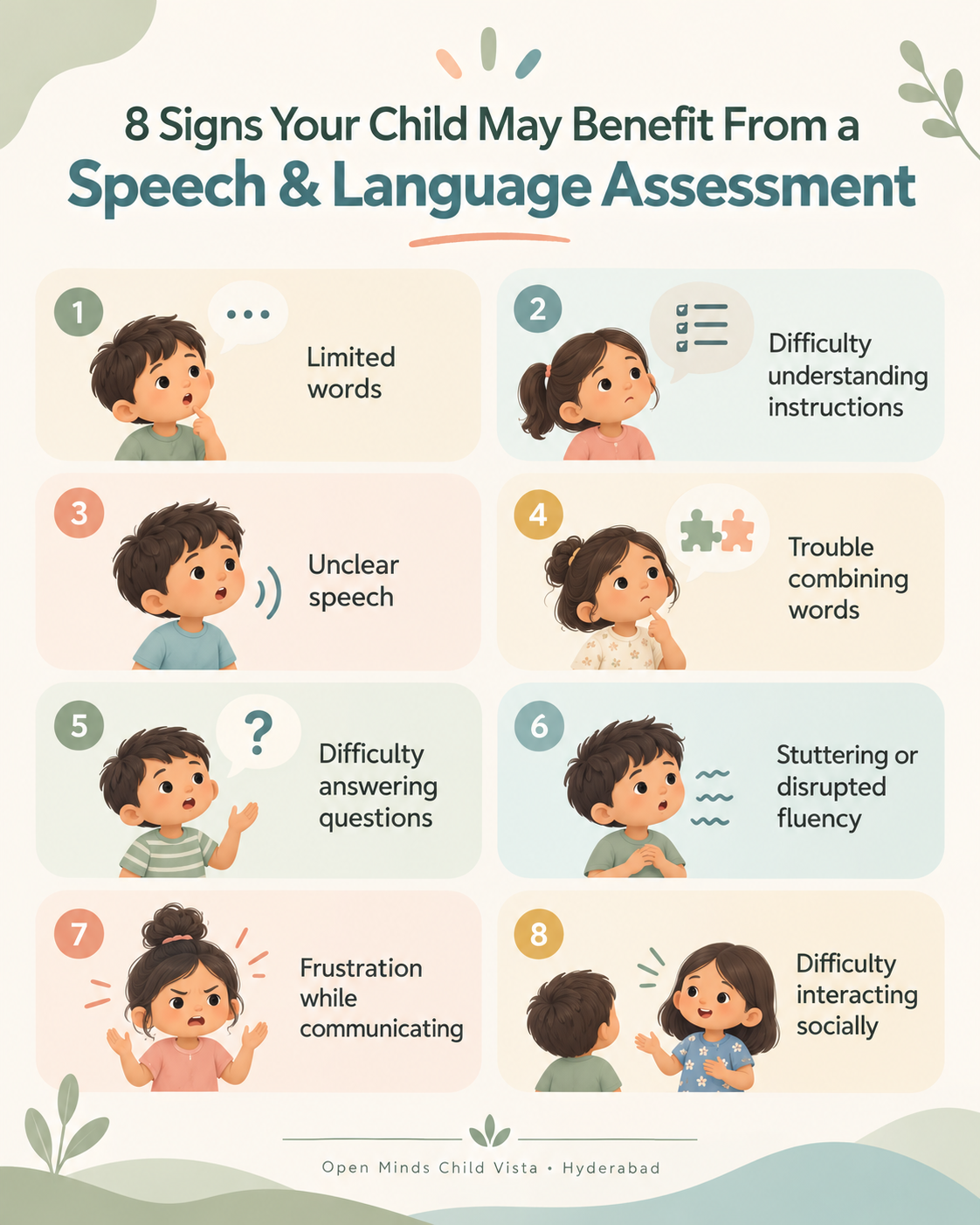
Parents often notice communication differences during normal daily routines. A child may use fewer words than expected, find it hard to make sentences, have unclear speech, struggle to follow spoken instructions or become frustrated while trying to communicate.
Common Signs Parents May Notice
- Difficulty communicating wants or needs.
- Very few words or difficulty combining words.
- Speech that other people often find difficult to understand.
- Difficulty understanding questions or simple spoken instructions.
- Difficulty taking part in conversations or social interaction.
- Repeating sounds or words with noticeable difficulty or effort.
- Frustration linked to communication.
- Loss of communication skills that were previously used.
When Should Parents Consider a Speech and Language Assessment?
An assessment may be worth discussing when concerns continue over time, affect daily participation, or are noticed across settings such as home, school or play. Parents can also seek guidance simply because they are unsure whether what they are seeing needs closer attention.
Build a clearer communication picture
Speech and Language Concerns We Support
A child may need support in one communication area or in several areas at the same time. The starting point should be the individual child and the questions raised during consultation and assessment.
01
Speech Delay and Late Talking
Families may notice fewer spoken words or sentences than expected. A professional can look at the child’s full communication profile, including words, gestures, understanding and interaction.
02
Expressive Language Difficulties
A child may know what they want to say but find it difficult to find words, build sentences, answer questions or explain ideas.
03
Receptive Language Difficulties
Some children find it difficult to understand words, questions, longer sentences or spoken instructions, even when they use many words themselves.
04
Speech Sound and Articulation Difficulties
A child may know exactly what they want to say but have difficulty producing certain sounds clearly enough for listeners to understand.
05
Stuttering and Fluency Difficulties
Repeating sounds, stretching sounds or moments of difficulty starting speech may be worth discussing when they are persistent or distressing.
06
Social Communication Difficulties
Communication also includes starting interactions, responding, turn-taking, explaining ideas, asking for help and participating in play or conversation.
Different ages, different communication demands
Speech Therapy for Children in Hyderabad
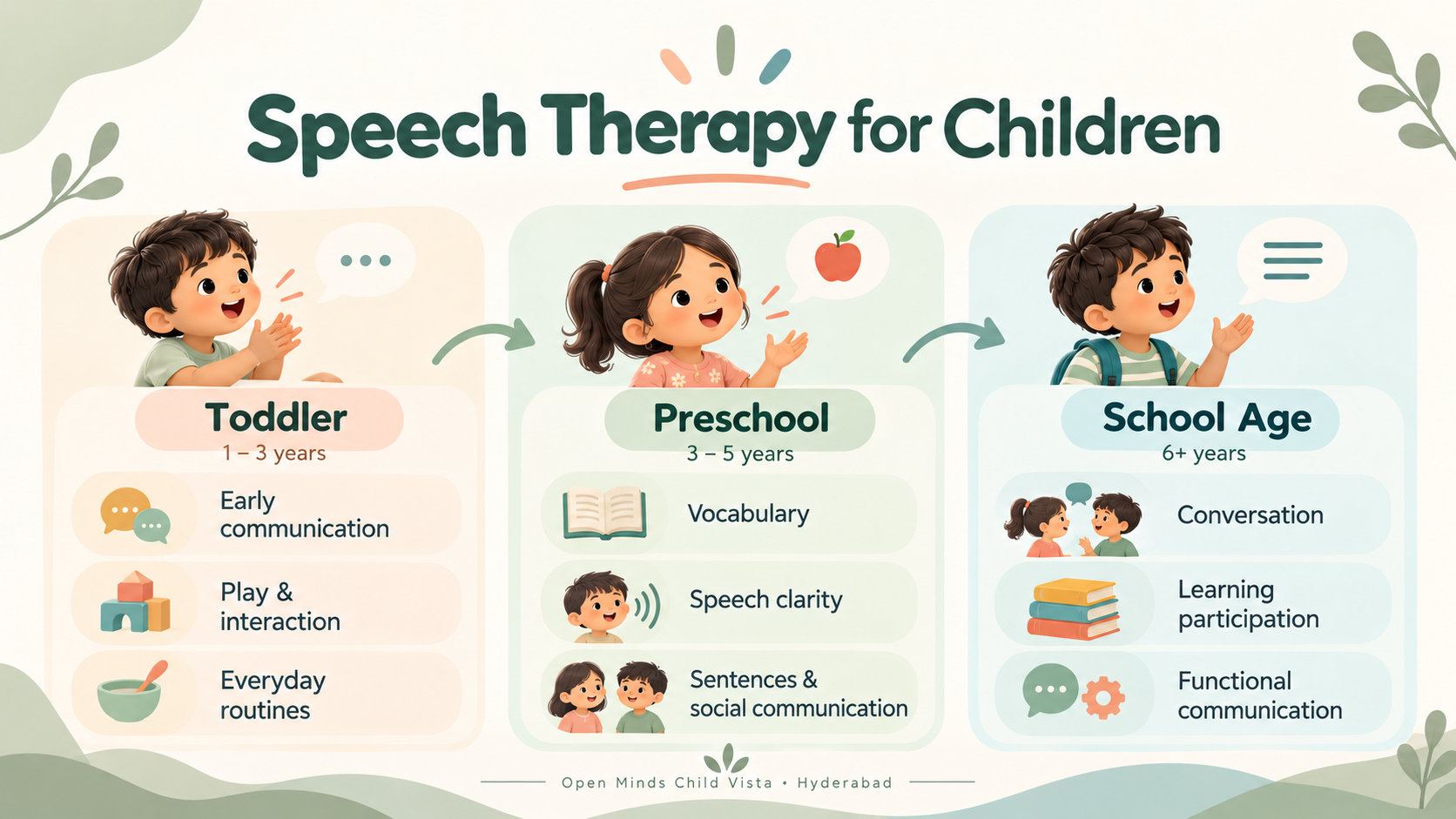
Children use communication differently as they grow. Support for a toddler may look very different from support for a preschool or school-age child. Therapy should therefore be based on current abilities, daily environments and individual goals.
Speech Therapy for Toddlers
For younger children, communication support may be built around play, shared attention, everyday routines and interaction. Parents and caregivers are especially important because much of a young child’s communication happens during daily activities.
Speech Therapy for Preschool Children
Preschool children may be building vocabulary, sentences, speech clarity, conversation and social communication. Age-appropriate activities can support practical goals.
Speech Therapy for School-Age Children
School creates new communication demands. Children may need to understand longer instructions, explain ideas, answer questions, interact with classmates and communicate during learning activities.
Assessment, explained simply
What Happens During a Speech and Language Assessment?
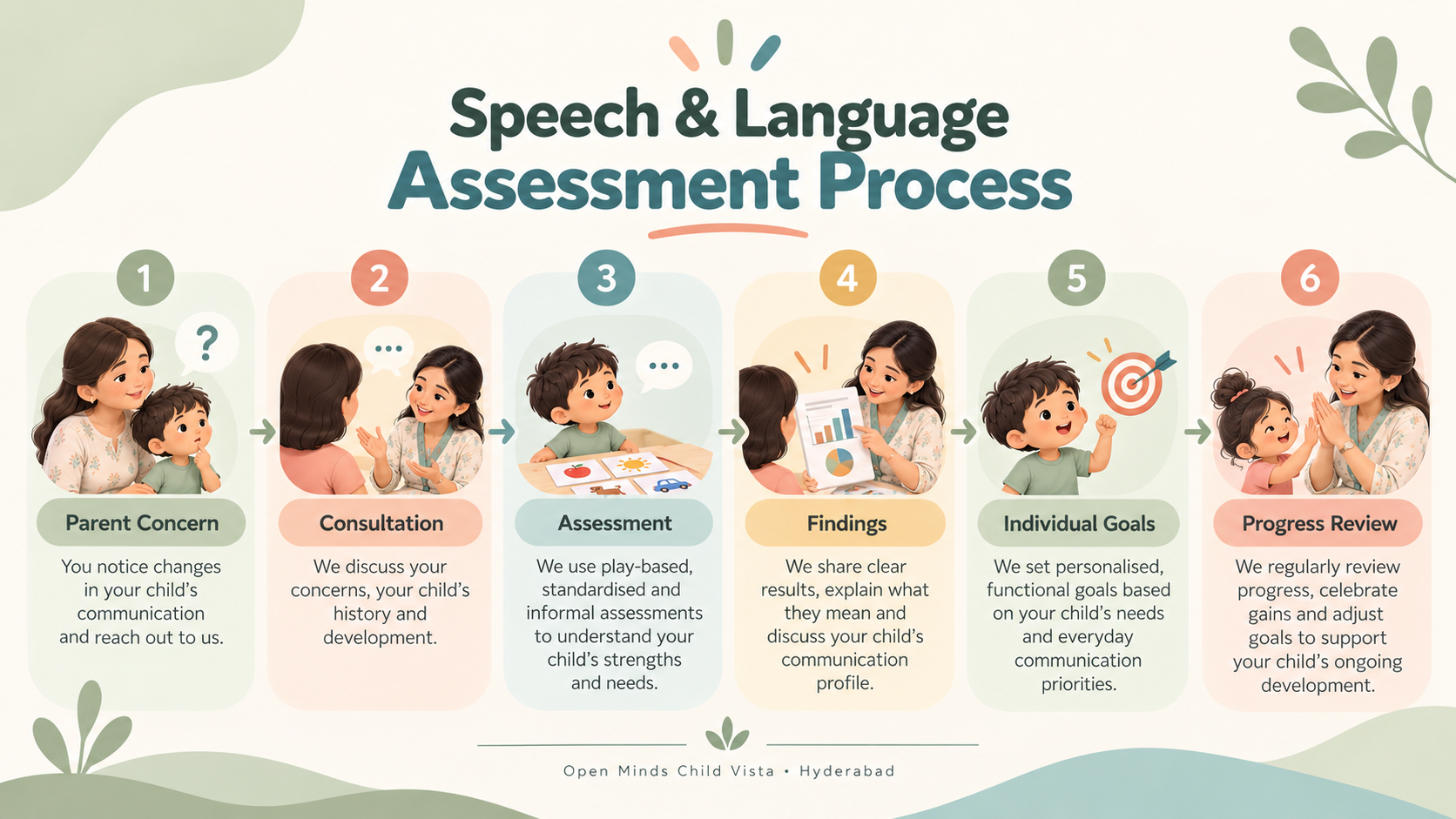
A speech and language assessment helps build a clearer picture of how a child communicates. The exact process depends on the reason for referral and the child’s individual needs.
01 Parent and Caregiver Discussion
02 Child Observation
The professional may observe play, listening, interaction, gestures, sounds, words and responses.
03 Speech and Language Skills Assessment
Depending on the concern, assessment may explore understanding, expression, speech sounds, fluency, social communication and functional communication.
04 Understanding the Findings
Parents should be able to understand strengths, concerns, whether therapy may be useful and whether another type of professional input should be considered.
05 Individualized Therapy Recommendations
If therapy is recommended, goals can be based on the child rather than a standard plan used for everyone.
A child-centred therapy process
How Does Speech Therapy Work at Open Minds Child Vista?
A helpful therapy plan begins by understanding the child. The exact process may vary, but families can expect conversations about concerns, communication needs, goals and progress.
01 Understand Your Child’s Communication Needs
Look at what feels difficult, what is already going well and when communication feels easiest.
02 Set Individualized Therapy Goals
Goals can focus on practical communication that matters in the child’s everyday life.
03 Begin Child-Centred Therapy Sessions
Activities can suit the child’s age, communication style, interests and professional goals.
04 Support Parents With Home Strategies
Families may be shown simple ways to create communication opportunities during ordinary routines.
05 Review Progress and Adapt Goals
Goals can change as communication develops or priorities become clearer.

How support is framed
Our Approach to Speech and Language Therapy
Communication support should respect who the child is. The aim is not simply to complete therapy activities. Skills should become useful in real life.
01 Child-Centred Support
Activities and goals should reflect the individual child rather than the same programme for everyone.
02 Play-Based Learning Where Appropriate
Play can create natural opportunities for asking, responding, turn-taking and shared attention.
03 Individualized Goals
A useful goal should connect with communication in home, school, play or social participation.
04 Parent and Caregiver Collaboration
Family observations provide context that may not appear during one therapy session.
05 Functional Communication Skills
Support can focus on asking, refusing, sharing ideas, asking for help and participating in conversation.
06 Progress Monitoring
Goals should be reviewed and updated as the child’s needs change.
From concern to a clearer next step
A Parent’s Journey at Open Minds Child Vista
Parents do not need to know exactly which service their child needs before contacting the centre. A simple journey can begin with what you have noticed.
01
You Notice a Communication Concern
You may notice difficulty with words, understanding, speech clarity, fluency or interaction.
02
You Speak With the Team
Share what you have noticed and what you would like to understand.
03
A Next Step Is Discussed
The team can help you understand whether assessment, consultation or another professional conversation may be appropriate.
04
You Understand the Child’s Needs
Assessment findings can help organize strengths, concerns and possible goals.
05
Individual Goals Are Planned
Goals can focus on communication skills that matter in everyday life.
06
Therapy Begins Where Appropriate
Activities can be adjusted to the child’s needs and developmental stage.
07
Parents Receive Guidance
Families can discuss practical ways to support communication outside sessions.
08
Progress Is Reviewed
Goals can be updated when needs change or new priorities appear.
Everyday interaction matters
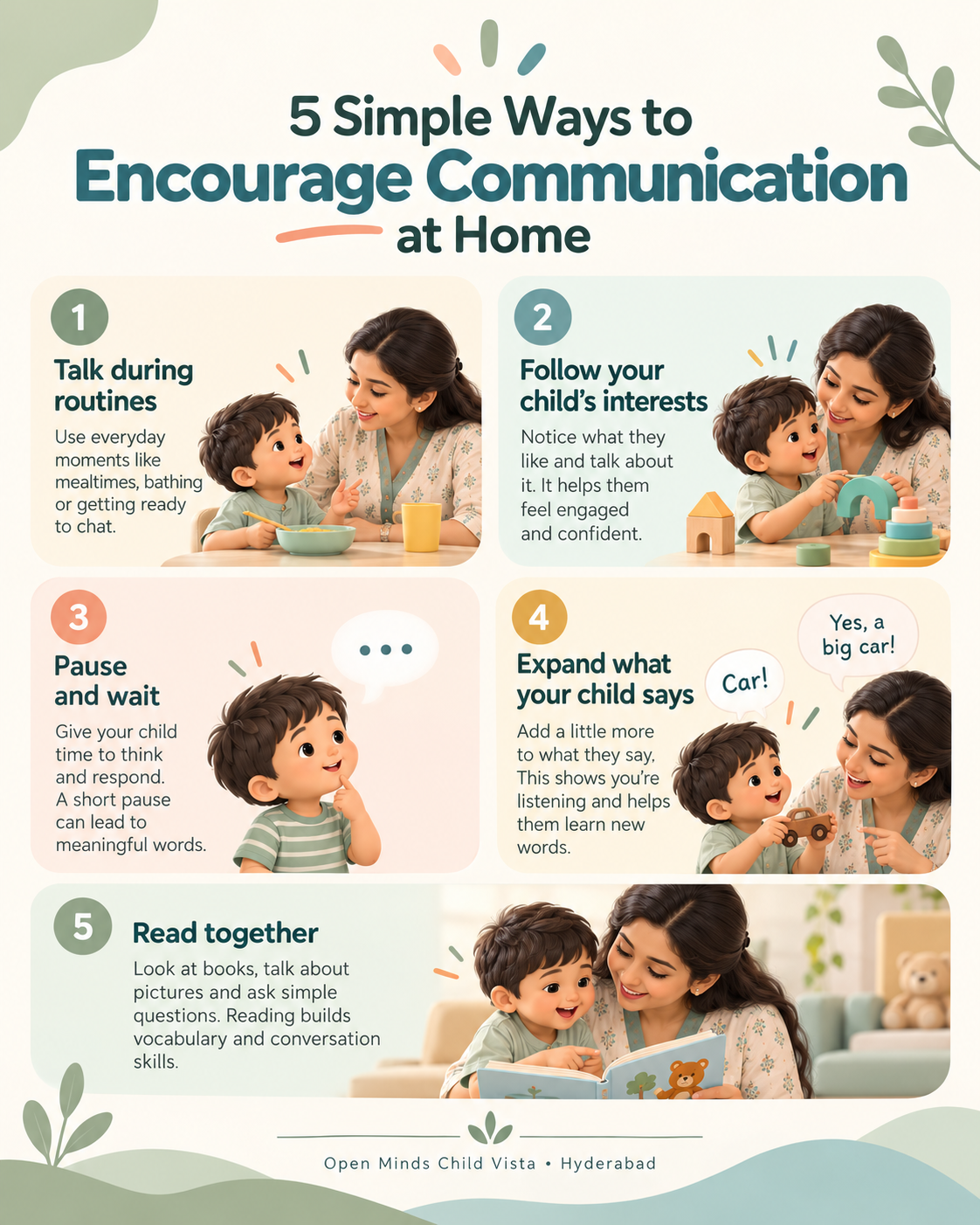
How Can Parents Support Speech and Language Development at Home?
Parents do not need special equipment to create communication opportunities. Many useful moments happen during normal family routines.
- Talk about what you are doing: use simple language during meals, dressing, play and travel.
- Follow your child’s interests: join activities the child already enjoys and add language naturally.
- Give time to respond: allow a short pause instead of answering immediately for the child.
- Expand what your child says: add a little language without turning every interaction into correction.
- Read together: name pictures, notice actions, talk about characters and enjoy the shared interaction.
- Keep communication enjoyable: comment, play and respond instead of constantly testing.

Meet the professional
Meet Our Speech & Language Therapist
K. Jaya Surya
Speech & Language Therapist · Open Minds Child Vista
K. Jaya Surya is listed by Open Minds Child Vista as part of the centre’s published professional team in Hyderabad. Parents can contact the centre to ask about current availability, assessment options and whether speech and language therapy is appropriate for their child’s needs.
What families can look for
Why Choose Open Minds Child Vista for Speech Therapy in Hyderabad?
Choosing a therapy centre is an important family decision. Parents should feel comfortable asking questions and understanding why a particular next step is being recommended.
01
Child-Focused Environment
The centre focuses on child development and services related to communication, learning, everyday skills and developmental needs.
02
Individualized Therapy Planning
Children have different strengths and communication needs. Therapy planning should reflect those differences.
03
Parent Collaboration
Parents can provide important context about communication across daily routines and settings.
04
Multidisciplinary Child Development Support
Open Minds Child Vista lists speech therapy alongside occupational therapy, early intervention, behaviour therapy, learning support and assessments.
05
Clear Next Steps
Families should understand what is being recommended and why. Questions are encouraged before decisions are made.
06
Hyderabad Location
The centre is located in the Lanco Hills Road area of Chaitanya Enclave, Hyderabad.
Visit us in Hyderabad
Find Open Minds Child Vista
Families looking for speech and language support can contact the team to discuss their concerns, available services and an appropriate next step.

Open Minds Child Vista
Chaitanya Enclave, Hyderabad,
Telangana 500089, India.
How to Reach Open Minds Child Vista
The centre is in the Lanco Hills Road area of Chaitanya Enclave, Hyderabad. Use the live Google Maps listing below for current directions.
Preparing for the first visit
What Can Parents Expect at the First Appointment?
The first appointment is an opportunity to share your concerns and understand what type of professional support may be relevant. You do not need to know the correct clinical term before arriving.
01
What Information Should I Bring?
A short list of questions, examples of situations where communication is difficult, relevant school observations, previous reports if available and information about languages used at home can be helpful.
02
Will My Child Be Assessed During the First Visit?
The exact process can depend on the reason for the appointment and the type of booking. Ask the Open Minds Child Vista team what to expect when scheduling your visit.
03
What Happens After the Assessment?
The professional can discuss findings and possible next steps, which may include therapy recommendations, home guidance, monitoring, further assessment or input from another professional.
A practical question
How Much Does Speech Therapy Cost in Hyderabad?
Speech therapy fees in Hyderabad can vary depending on the provider, type of appointment, assessment needs, session format, duration and frequency.
Open Minds Child Vista does not currently publish a fixed speech-therapy fee on its website. For current assessment and therapy charges, contact the centre directly before booking.
When comparing fees, parents can also ask:
- Who will provide the therapy?
- Is an assessment needed first?
- How are therapy goals selected?
- How is progress reviewed?
- How are families involved?
- What is included in the quoted fee?
There is no single timeline
How Long Does a Child Need Speech Therapy?
There is no fixed therapy duration that applies to every child. The length of support can depend on the communication need, goals, frequency, everyday use of skills, progress and other developmental factors.
01
Communication Need
Some goals are narrow and specific. Others involve several connected communication skills.
02
Therapy Goals and Frequency
The type of goal and how often therapy is recommended can influence the overall therapy journey.
03
Progress in Daily Life
It is more useful to review meaningful change than to promise a fixed number of sessions.
Progress should connect with real goals
How Is Progress in Speech Therapy Monitored?
Progress should connect with the skills that matter to the child. A therapist may consider session performance together with information from parents and, where appropriate, other settings.
01
Individual Goals
Clear goals provide a starting point for tracking change. Specific communication targets are more useful than a broad goal such as “improve speech.”
02
Session Observations
The therapist can observe how the child responds to activities and whether a skill is becoming easier.
03
Parent Feedback
Families may notice changes outside therapy first, such as easier requesting, clearer communication or greater participation in conversation.
04
Periodic Progress Reviews
Reviews allow the family and professional to discuss what has improved, what remains difficult and whether goals should change.
Good questions deserve clear answers
Frequently Asked Questions About Speech Therapy in Hyderabad
Your next step can be a conversation
Book a Speech and Language Consultation in Hyderabad
You do not need to know exactly what type of support your child needs before getting in touch. Start by sharing what you have noticed. The Open Minds Child Vista team can help you explore whether a speech and language assessment, consultation or another professional next step may be appropriate.